

The situation in the Persian Gulf, Hormuz, and the wider Middle East is taking a dangerous turn after the US attacked again on July 9, 2026, striking 6 cities in Iran and causing a barrage of explosions across 150 targets in Iran… The retaliation, however, from Iran and Iran's Islamic Revolutionary Guard Corps was ruthless, as they targeted Qatar, the 5th Fleet in Bahrain, and the Azraq base in Jordan, while the explosions in Kuwait are unprecedented. Iran struck a multitude of targets, and the Persian Gulf countries warn that chaos is returning to the region. According to the IRGC, during the first wave of Iranian retaliation... 4 American bases were hit: Arifjan and Ali al-Salem in Kuwait, and Al-Juffair and Sheikh Isa in Bahrain.
Hell of retaliation – Iran hit Doha, US 5th Fleet in Bahrain, explosions in Kuwait and Azraq base in Jordan
Following the new US attacks on Iran where they struck 150 targets, the retaliation by the Iranian military and the IRGC of Iran's Islamic Revolutionary Guard Corps is unprecedented. Iran struck in the early morning hours of July 9, 2026:
-
Major explosions occurred in Doha, Qatar.
-
The 5th Fleet base in Bahrain was hit repeatedly in the new attack.
-
Iran attacked Kuwait with incredible severity.
-
Iran struck the American Azraq airbase in eastern Jordan.
News sources report multiple explosions again at US military bases in Kuwait. The situation in Kuwait after the strikes from Iranian missiles is dramatic. According to Sabreen News: Iranian missiles targeted the Azraq base in eastern Jordan. Iran's missile attacks continue, and the explosions in Kuwait have not stopped; Kuwait was a primary target in Iran's new retaliatory attacks. Videos in circulation show black smoke rising from the US Navy's 5th Fleet base in Bahrain. Arab news sources reported that Iranian missiles struck an American base in Kuwait and that the country's air defense systems were ineffective. The Kuwaiti military announced that the country's defensive systems are currently engaging the incoming missiles and drones. At the same time, Iraqi sources report that the sound of the explosions in Kuwait is so loud that it can be heard in certain parts of the country.
IRGC: We hit 4 American bases Arifjan and Ali al-Salem in Kuwait, and Al-Juffair and Sheikh Isa in Bahrain
The IRGC, Iran's Revolutionary Guard Corps, struck four American bases in Kuwait and Bahrain. "In the first phase of retaliation against the American violators of agreements, the naval and aerospace forces of the IRGC carried out a joint operation, attacking key infrastructure and facilities at the American bases Arifjan and Ali al-Salem in Kuwait, and the bases Al-Juffair and Sheikh Isa in Bahrain, several hours after the enemy launched attacks on various regions of the country," the military stated. They also threatened to expand attacks against American targets in the region if US aggression does not stop.
The US hit 150 targets in Iran, explosions in Bandar Abbas, Bushehr, Shirik, Konarak, Akala, and Chabahar
Explorations rocked several cities in Iran after American attacks targeted 8 cities, hitting a total of 150 targets. Explosions were reported in both the southern and northern parts of Iran: in Bandar Abbas, Konarak, Shirik, Jask, Iranshahr, Akala, and Chabahar. Similar incidents also occurred on Abu Musa Island in the Persian Gulf. At least two people are known to have lost their lives: a firefighter and an employee of the meteorological center at the Iranshahr airport. In Chabahar, American strikes caused damage to a hospital building, docks, and a control tower. Power was also knocked out. As Axios reported, the US military has expanded the scope of its attacks, hitting coastal radars, anti-ship missile installations, and air defense systems. US President Trump claimed that these attacks were in response to the alleged bombardment of ships by Iran. US President Trump threatened to increase the intensity of the attacks if a similar incident occurs again. According to Trump, only the US can extract uranium from Iran's nuclear facilities.
According to the American President, the ceasefire with Iran is no longer valid. He added that he could allow his negotiators to continue the dialogue with Iran, but he saw no point in doing so. According to the president, it was a waste of time. Furthermore, the head of the White House threatened that Iran's new leadership could also "disappear." American forces launched a series of attacks on July 8 and 9, 2026, against the Islamic Republic. According to CENTCOM, this was done in response to Tehran's actions against commercial vessels in the Strait of Hormuz. The Iranian Ministry of Foreign Affairs characterized the attacks as a serious violation of the memorandum of understanding between the two sides. The IRGC later struck American infrastructure across a multitude of US military bases in the Persian Gulf. According to the American side, the attacks are a response to previous strikes by Iran against three commercial vessels navigating the Strait of Hormuz, one of the most important maritime arteries for international shipping and the global energy market. Washington argued that "Iran's aggressive stance" was unjustified, dangerous, and constitutes a clear violation of the ceasefire agreement. The developments heighten tension in the Persian Gulf region, with both sides exchanging accusations over the escalation of hostilities and the violation of commitments agreed upon to limit military confrontation.
U.S. Central Command forces have begun launching a series of powerful strikes against Iran to impose heavy costs for targeting and attacking commercial shipping crewed by innocent civilians in an international waterway. The U.S. strikes are in response to Iranian attacks on three…
— U.S. Central Command (@CENTCOM) July 7, 2026
Powerful explosions around Khuzestan, in Bandar Abbas and Sirik
A series of explosions was reported in the areas around the Iranian province of Khuzestan, the port of Bandar Abbas, as well as on Sirik Island, according to initial information. At the same time, 7 United States Air Force aircraft, which are conducting aerial refueling missions (as also shown in the relevant snapshot), are in flight over the Persian Gulf.
Trump: Iran has targeted me for assassination, I am the number one target
US President Trump believes he could be the target of an assassination attempt because he is Iran's number one target. "I am number one on Iran's target list," Trump said. The US President estimated the probability of such an outcome at 5.2%. It is recalled that Trump has already survived assassination attempts. In 2024, at a rally in Pennsylvania, a gunman attempted to assassinate him—then a presidential candidate.
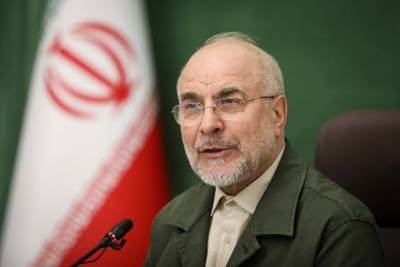
Ghalibaf: Iran cannot be blackmailed, strike Americans.... we will strike you with greater force, Hormuz is Iranian
According to Iranian Parliament Speaker Ghalibaf, America has not yet learned that bullying and violating agreements are no longer free options. Let me be clear: strike, and we will strike you. According to the Tasnim news agency, Mohammad Baqer Ghalibaf, Speaker of the Parliament, wrote: "Do not look for details or you will sink further: The Strait of Hormuz will only open with 'Iranian arrangements,' not with American threats."
Baghaei (Iranian MFA spokesman): European complicity in the US - Israel war against Iran
The spokesman for Iran's Ministry of Foreign Affairs, Esmaeil Baghaei, condemned the statements of NATO Secretary General Mark Rutte regarding the US and Israeli war against Tehran, accusing European countries of active complicity in the conflict. "Mark Rutte's repeated admissions of Europe's deliberate complicity in the aggressive war of the US and Israel against Iran confirm, once again, that they were not impartial toward this brutal and illegal attack," Esmaeil Baghaei wrote on the X platform. "Those who granted their territory, their military bases, and their infrastructure to facilitate the attack cannot avoid responsibility for their contribution to an unprovoked act of aggression and its serious consequences," the Iranian Foreign Ministry spokesman added. The statements by Esmaeil Baghaei were made after Mark Rutte expressed support for the recent American attacks against Iran, calling them "absolutely necessary." Earlier, he had also stated that NATO member countries provided logistical support to the US during the war in March, mentioning that 4,000 to 5,000 American aircraft took off from bases in Europe during the first six weeks of the conflict.
American CENTCOM announced naval patrols with 20 vessels in Hormuz
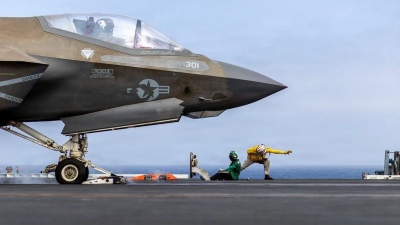
More than 20 United States Navy warships are currently patrolling the waters of the wider Middle East region, as US Central Command forces continue—according to Washington—operations to enhance regional security and stability. Last month, American warships and aircraft conducted a transit through the Arabian Sea in a close-formation parade, a move that, according to the US Pentagon, was aimed at demonstrating the "unrivaled military power and operational firepower capability of the United States."
Vance (US): The Iranians were supposed to stop hitting ships in Hormuz, but they did
US Vice President JD Vance stated: "The initial deal we signed was that if the Iranians stopped shooting at ships, we would lift the blockade of the Strait of Hormuz, but what happened 24 hours ago? They started shooting at ships again." JD Vance, speaking about the new clashes between Iran and the United States, compared the ceasefire agreement between the two countries to a "deal": "The initial deal we signed was that if they stopped shooting at ships, we would lift the blockade of the Strait of Hormuz, but what happened 24 hours ago? They started shooting at ships again." According to Vance, if Iran continues to strike ships in Hormuz: "Our president is considering many options. Obviously, I cannot say what will happen tonight, but the president has told them very simply, the Strait of Hormuz will open. This means that oil and natural gas will flow to the American people. That is why we see oil and gasoline prices beginning to decrease." He said that the US president's emphasis on keeping a vital artery open for global energy is important and "this is what the Iranians need to know."
Bloomberg: The end... of traffic in Hormuz
The latest information following the second consecutive day of exchanges of fire between the US and Iran indicates that maritime traffic through the Strait of Hormuz has almost come to a standstill. Citing ship-tracking data, the agency reports that, among the larger vessels, only one supertanker under US sanctions was seen exiting the Persian Gulf, along with an Iranian-flagged container ship. A total of 14 cargo ships crossed the Strait yesterday in both directions, a figure that represents the lowest level since the memorandum of understanding between the US and Iran on June 16. On average, 34 ships were transiting the Strait during the three weeks following the agreement between the two countries for a temporary settlement, the publication highlights.
Scott Uehlinger (former CIA): The US is attempting to "limit Iran's capability" to control the Strait of Hormuz
Scott Uehlinger, a former senior CIA official, argued that finding a diplomatic way out of the ongoing escalation between the US and Iran will be "very difficult." In statements, Uehlinger mentioned that the US struck Iran, partly hoping that Tehran would revise its stance regarding the Strait of Hormuz. "The United States attempted to make it clear, through Trump, that this was retaliation due to Iran's refusal to cooperate regarding the Strait of Hormuz. I believe that Trump hoped, to some extent, that the regime would learn its lesson and return to the memorandum," Uehlinger stated. The analyst added that the US is attempting to deprive Iran of its strategic advantage in the Strait of Hormuz. "That is why we have seen so many attacks targeting Iran's capability to attempt to control the Strait. Maritime traffic control centers have been destroyed. Missile launch positions have been destroyed, as have speedboats, all as part of the effort to further limit Iran's capability to influence navigation in the Strait," Uehlinger said. "I believe Trump hopes that, by reducing this capability or showing the Iranians that they do not possess it, they will eventually return to the memorandum of understanding," the analyst emphasized.
www.bankingnews.gr





Σχόλια αναγνωστών